
Call Our Office
CA | (559) 384-2900
TN | (931) 299-7002
Your Money
Your Life
Your Way
You are now leaving the Strong Valley Wealth & Pension, LLC ("Strong Valley") website. By clicking on the "Schwab Alliance Access" link below you will be entering the Charles Schwab & Co., Inc. (“Schwab”) Website. Schwab is a registered broker-dealer, and is not affiliated with Strong Valley or any advisor(s) whose name(s) appears on this Website. Strong Valley is/are independently owned and operated. Schwab neither endorses nor recommends Strong Valley. Regardless of any referral or recommendation, Schwab does not endorse or recommend the investment strategy of any advisor. Schwab has agreements with Strong Valley under which Schwab provides Strong Valley with services related to your account. Schwab does not review the Strong Valley website(s), and makes no representation regarding the content of the Website(s). The information contained in the Strong Valley website should not be considered to be either a recommendation by Schwab or a solicitation of any offer to purchase or sell any securities.
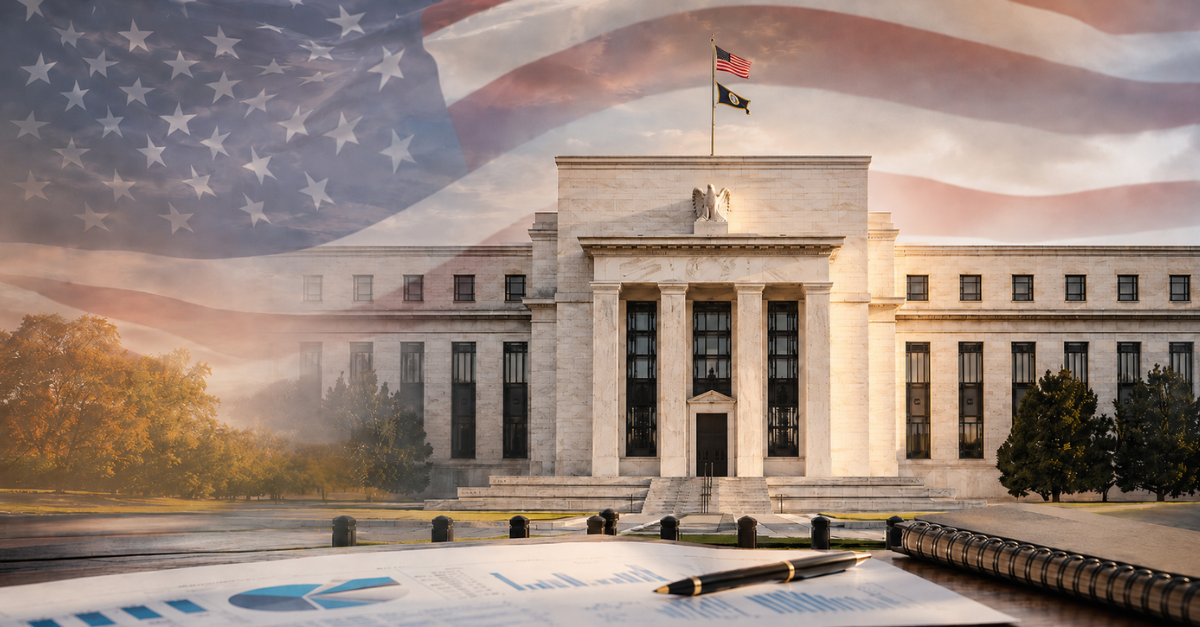
Why does the Federal Reserve get so much attention? Learn what the Fed does and how monetary policy can influence economic conditions. This article offers a helpful overview of the Fed’s role, its limits, and why its decisions often appear in financial headlines.

The Federal Reserve often attracts headlines when interest rates, inflation, employment, or market volatility are in focus. While the Fed’s decisions can influence the economy and financial markets, it is helpful to understand what the Federal Reserve does, what it does not do, and how its actions may connect to everyday financial planning.
The Fed does not set tax policy, fiscal policy, or broad economic policy. Those responsibilities generally involve Congress, the President, and other parts of government. The Federal Reserve conducts monetary policy, which is designed to influence financial conditions in pursuit of its statutory goals.
A brief look at the Federal Reserve.
The Federal Reserve is the central bank of the United States. It was created by the Federal Reserve Act of 1913. The authors of the Federal Reserve Act intentionally created a framework so that the Federal Reserve System is not "owned" by anyone. Instead, the Fed is an independent entity within the government.
And while the Fed derives its authority from Congress, its monetary policy decisions do not have to be approved by anyone in the legislative or executive branches of the government. The Federal Reserve includes the Board of Governors in Washington, D.C., 12 regional Federal Reserve Banks, and the Federal Open Market Committee, commonly called the FOMC. This structure is intended to combine national oversight with regional economic insight.
What monetary policy is designed to do.
The Federal Reserve uses monetary policy to serve the public interest by promoting the health of the US economy and the stability of the US financial system. It’s mandated by Congress to maximize employment, keep prices stable and moderate long-term interest rates. In practice, the Fed sets the stance of monetary policy which can affect household and business decisions over time.
The Fed’s work can be felt in many areas of financial life, including borrowing costs, savings rates, bond yields, business investment, employment conditions, and inflation expectations. However, those effects are rarely immediate or perfectly predictable.
How interest-rate decisions can affect the private sector.
While changes in monetary policy can influence financial markets, they do not determine outcomes by themselves. When interest rates move, consumers may notice changes in mortgage and credit card rates, auto loans, savings accounts, and other financial products. For business owners, changing rate environments can affect borrowing costs which in turn impacts expansion plans as well as equipment financing and commercial real estate decisions.
Keep the focus on planning, not prediction.
The Federal Reserve regularly evaluates incoming economic data. Since market expectations can change quickly, rather than trying to predict every policy move, individuals and families may benefit from understanding how rate changes could affect their own financial plan. Household planning, in light of Fed changes, might include reviewing debt, savings, portfolio allocation, liquidity, and timing for major purchases or withdrawals.
A practical reason to meet with an advisor.
Educational topics such as monetary policy can be helpful because they connect national economic news to personal financial decisions. A conversation with a financial professional can help translate those headlines into a more organized review of your own goals, resources, and planning priorities without assuming that one Fed decision should drive every financial move.
Strong Valley Wealth & Pension can help individuals, families, and business owners consider how interest rates, cash flow, investments, and long-term objectives fit together within a broader financial strategy. The goal is not to react to every headline, but to stay prepared as conditions change.