Call Our Office
CA | (559) 384-2900
TN | (931) 299-7002
Your Money
Your Life
Your Way
You are now leaving the Strong Valley Wealth & Pension, LLC ("Strong Valley") website. By clicking on the "Schwab Alliance Access" link below you will be entering the Charles Schwab & Co., Inc. (“Schwab”) Website. Schwab is a registered broker-dealer, and is not affiliated with Strong Valley or any advisor(s) whose name(s) appears on this Website. Strong Valley is/are independently owned and operated. Schwab neither endorses nor recommends Strong Valley. Regardless of any referral or recommendation, Schwab does not endorse or recommend the investment strategy of any advisor. Schwab has agreements with Strong Valley under which Schwab provides Strong Valley with services related to your account. Schwab does not review the Strong Valley website(s), and makes no representation regarding the content of the Website(s). The information contained in the Strong Valley website should not be considered to be either a recommendation by Schwab or a solicitation of any offer to purchase or sell any securities.

How might changing interest rates affect your financial decisions? Learn how rates can shape borrowing, saving, and investing choices—and why understanding the basics may help support more confident planning as conditions change. A thoughtful review can help keep the bigger picture in focus.

Interest rates affect many everyday financial decisions, from savings accounts and certificates of deposit to mortgages, credit cards, business financing, and bond investments. Because rates can influence both the cost of borrowing and the return earned on certain types of savings, understanding the basics can help households make more informed decisions without reacting to every short-term change.
What interest rates represent.
Interest is the cost of using borrowed money. For a borrower, it is the price paid for access to funds today. For a saver or lender, it can represent compensation for allowing someone else to use money for a period of time. The interest rate is the percentage used to calculate that cost or return, though the total cost of borrowing can also depend on fees, repayment terms, compounding, and whether the rate is fixed or variable.
Why rates move over time.
Interest rates can change for many reasons, including inflation expectations, economic growth, credit conditions, investor demand, and monetary policy. When credit is more readily available or demand for borrowing weakens, rates may move lower. When inflation rises, economic uncertainty increases, or demand for credit grows, rates may move higher. No single factor explains every rate change, which is why it is often more useful to understand the broader relationship between rates and financial planning than to try to predict the next move.
The role of the Federal Reserve.
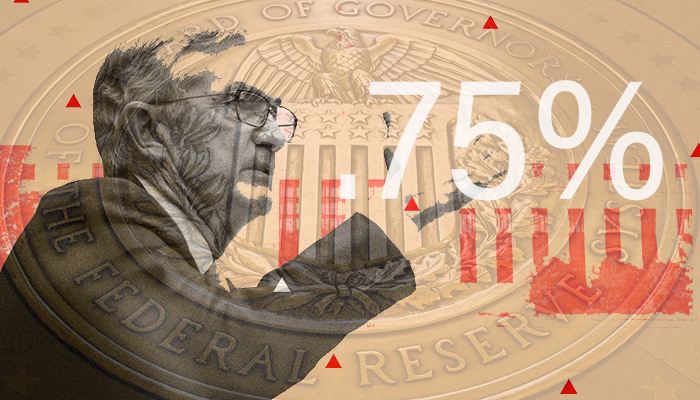
The Federal Reserve influences short-term interest rates through monetary policy. This. includes the target range for the federal funds rate and the tools used to implement that policy. The federal funds rate is the rate at which depository institutions lend balances to one another overnight, and it can influence other rates throughout the economy. The Federal Reserve also uses open market operations to help implement monetary policy. While the Fed does not directly set every consumer loan or savings rate, its actions can affect the interest-rate environment that consumers and businesses experience.
Borrowing decisions.
For borrowers, interest rates can affect monthly payments, total interest costs, and affordability. Higher rates generally make new borrowing more expensive, while lower rates may reduce the cost of financing. The impact can be especially noticeable for large or long-term obligations such as mortgages, student loans, auto loans, and business financing. Before taking on debt, it can be helpful to consider not only the rate, but also the term, repayment flexibility, as well as any fees. These items should be evaluated in light of the broader household or business budget.
Saving and cash management.
For savers, higher rates may create opportunities to earn more on cash reserves, money market funds, certificates of deposit, or other interest-bearing accounts. However, the highest stated rate is not the only consideration, other factors include liquidity, insurance coverage, and access to funds. Timing matters, too. Cash intended for emergencies or short-term needs may deserve a different approach than funds earmarked for long-term investing.
Planning through changing rate environments.
Because interest rates influence so many areas of financial life, a rate change can be a useful prompt for a review. Households may want to revisit borrowing costs, savings vehicles, and income needs. Business owners may also want to evaluate financing costs and timing for major purchases. Strong Valley Wealth & Pension can help individuals, families, and business owners review how borrowing, saving, and investing fit within a thoughtful long-term financial strategy.