Call Our Office
CA | (559) 384-2900
TN | (931) 299-7002
Your Money
Your Life
Your Way
You are now leaving the Strong Valley Wealth & Pension, LLC ("Strong Valley") website. By clicking on the "Schwab Alliance Access" link below you will be entering the Charles Schwab & Co., Inc. (“Schwab”) Website. Schwab is a registered broker-dealer, and is not affiliated with Strong Valley or any advisor(s) whose name(s) appears on this Website. Strong Valley is/are independently owned and operated. Schwab neither endorses nor recommends Strong Valley. Regardless of any referral or recommendation, Schwab does not endorse or recommend the investment strategy of any advisor. Schwab has agreements with Strong Valley under which Schwab provides Strong Valley with services related to your account. Schwab does not review the Strong Valley website(s), and makes no representation regarding the content of the Website(s). The information contained in the Strong Valley website should not be considered to be either a recommendation by Schwab or a solicitation of any offer to purchase or sell any securities.
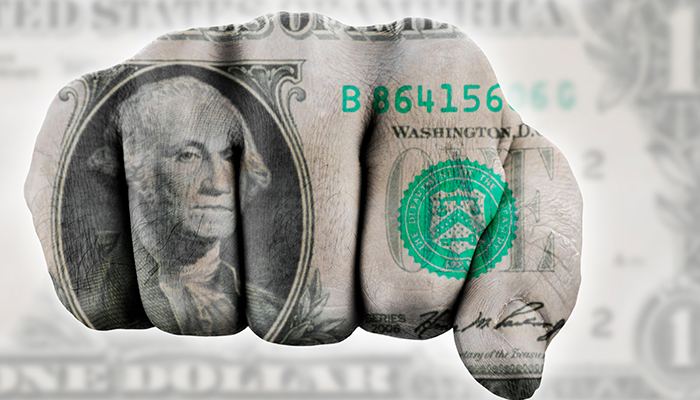
World currency fluctuations mean more than calculating your travel costs. Exporters win or lose every time currency rates fluctuate, affecting corporations and your portfolio. Here’s a brief overview of how that may look in global markets, how a strong dollar may affect U.S. exports, and the pros and cons of international investing.

The strong dollar is much in the news lately. But most Americans, other than tourists beyond our shores, don't focus on what that means to them. For U.S. investors, the upshot is not great. In fact, for most, currency fluctuations worldwide (and not just that of the dollar) are an invisible force that they don’t reckon with until it’s too late.
Calculating currency valuations from one country to another is complex and, if you’re like most people, you don’t give the subject much thought until you get ready to travel. You might visit your bank to swap greenbacks for a few euros, but usually you just plan to use a credit card to cover your tab on the Spanish Rivera or at the Tuscan villa.
For corporations and for your portfolio, though, fluctuating currency rates carry much more weight.
So what? Maybe you never plan to go to Europe. Your portfolio, likely containing international investments in its mutual funds, might still feel the fallout.
Let’s look at one past global monetary event back in 2015 when Switzerland reaffirmed the commitment to keep its franc at $1.20 to the European Union’s euro – then suddenly changed its position, sending the euro falling, the franc soaring and world markets reeling.
For one, German businesses suddenly found it much more expensive to buy Swiss watches, chocolates and cheese as Switzerland’s exporters were caught in a battle literally overnight. Meanwhile, Swiss citizens enjoyed welcome wealth.
Unlike Americans who may plan only an occasional trip to Paris, Swiss citizens commonly drive to France for the day. The currency move suddenly put an extra 15% to 20% of buying power into the hands of the Swiss who visit France.
We live in a global society, so understanding currency fluctuation means much more than calculating our travel costs and daily vacation spending. Exporters win or lose every time currency valuations change.
Keep in mind if the euro declines substantially against the U.S. dollar, for example, that new Mercedes is more affordable here but Apple iPhones cost much more in Germany than in this country.
Don’t feel too flush with the dollar’s comparative value. Nearly half the earnings in the Standard & Poor’s 500 come from companies based outside the U.S. Slowdown in global growth also dims outlooks for robust domestic growth as economists cite troubled overseas markets, volatile oil prices and, ironically, a stronger dollar.
For most of us, international investing, whether overt or hidden in our mutual funds, comes with pros and cons:
Pros: Variation in ups and downs of the world’s markets means your diversification enjoys a chance to work better. Mixing asset classes with low correlation to one another usually guards against portfolio-wide losses – and you won’t find lower correlation anywhere than across some pairings of global stock markets and indexes.
Cons: For the risks in international investing, look no further than headline political turmoil, border wars and other upheavals that send shock waves through almost all the world’s markets. Less grandiose but no less devastating: Exchange rate risk if your money must be converted before you can invest.
Like all financial decisions, such as investing and retirement planning, the further out you plan your trip, the more successful your journey.
Remember to add the world’s currencies to your budgeting and investing discussions with your financial advisor.