Call Our Office
CA | (559) 384-2900
Your Money
Your Life
Your Way
You are now leaving the Strong Valley Wealth & Pension, LLC ("Strong Valley") website. By clicking on the "Schwab Alliance Access" link below you will be entering the Charles Schwab & Co., Inc. (“Schwab”) Website. Schwab is a registered broker-dealer, and is not affiliated with Strong Valley or any advisor(s) whose name(s) appears on this Website. Strong Valley is/are independently owned and operated. Schwab neither endorses nor recommends Strong Valley. Regardless of any referral or recommendation, Schwab does not endorse or recommend the investment strategy of any advisor. Schwab has agreements with Strong Valley under which Schwab provides Strong Valley with services related to your account. Schwab does not review the Strong Valley website(s), and makes no representation regarding the content of the Website(s). The information contained in the Strong Valley website should not be considered to be either a recommendation by Schwab or a solicitation of any offer to purchase or sell any securities.
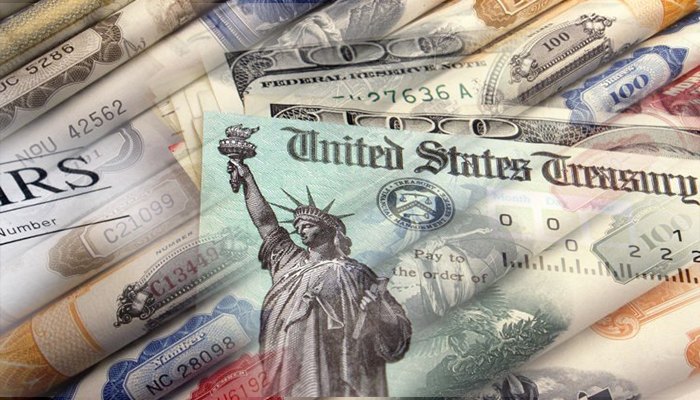
Now that tax season is over, you may be asking how to reduce taxes next year. The short and simple answer is to consider buying a portfolio of low-fee index mutual funds or exchange-traded funds. To help find the right ones for you, here are three things to look for.

As tax season comes to a close, you realize exactly how much you paid in taxes and naturally will ask the question, “what can I do to reduce my taxes next year?”
The very short and simple answer to this question is to consider a portfolio of low-fee, thoughtfully constructed, index mutual funds or exchange-traded funds. Yet not all of them do the job for you. Here’s how to find the right ones.
An index mutual fund is a passively managed fund that tracks the performance of a certain index, such as the Dow Jones Industrial Average, or a broad bond or commodity index.
An ETF is similar to an index mutual fund, but is traded on the stock exchanges, just like a stock. Rather than buying all of the stocks in the Dow Jones Industrial Average or Standard & Poor’s 500, you can simply own an ETF that tracks that index.
Because index mutual funds and ETFs are not actively managed, their fees are generally low – or lower than actively managed mutual funds. Also, their low turnover – how frequently stocks are bought and sold within a portfolio – can provide additional tax benefits as excess trading activity creates the potential for more taxable events.
Consider these three aspects before buying an index fund or ETF:
Decide what you want to own. This is obvious, but not simple. Choosing from the broad number of stock index providers can be overwhelming (the Dow, S&P 500, Russell 2000, MSCI, FTSE, etc.). Therefore, it’s important to understand what markets, countries, regions, industries, sectors and stocks the index fund you buy contains.
Is your goal to own large stocks, small stocks or both? Do you want U.S. stocks, international, emerging market or all of the above?
Just as important, the fund you choose should closely adhere to its benchmark index. The more closely the investment matches that of the desired exposure, the better.
Like actively managed mutual funds, every index fund and ETF has management fees. These fees range from more than 1% to as low as 0.00% per year.
That is not a typo – there are index funds that have zero management fees. And of course, the lower your investment fees, the more of the returns you keep.
Another factor affecting cost is liquidity, or put simply, how easy it is to buy and sell the investment. With mutual funds, this is not an issue because they are bought or sold at the end of each day. For ETFs, which are traded like stocks, their liquidity is a more important issue. If an ETF is thinly traded, to buy or sell, it may be more costly.
This measures how much the taxes you pay on distributions reduce a fund’s return. The lower this number, the better. Morningstar, an industry leader in tracking investments, offers this information for free.
Here is a great explanation taken directly from Morningstar:
“Like an expense ratio, the tax cost ratio is a measure of how one factor can negatively impact performance. Also like an expense ratio, it is usually concentrated in the range of 0-5%. 0% indicates that the fund had no taxable distributions and 5% indicates that the fund was less tax efficient.
For example, if a fund had a 2% tax cost ratio for the three-year time period, it means that on average each year, investors in that fund lost 2% of their assets to taxes.
If the fund had a three-year annualized pre-tax return of 10%, an investor in the fund took home about 8% on an after-tax basis. (Because the returns are compounded, the after-tax return is actually 7.8%.).”
Now that you know what you should keep in mind before investing in index mutual funds or ETFs, here is the tricky part:
And when you add the number of mutual funds to the number of U.S.-based ETFs, that number is over 10,000.
Talk to your financial advisor to find the right ones, along with the right combination, to fit your desired asset allocation and financial plan.