
Call Our Office
CA | (559) 384-2900
TN | (931) 299-7002
Your Money
Your Life
Your Way
You are now leaving the Strong Valley Wealth & Pension, LLC ("Strong Valley") website. By clicking on the "Schwab Alliance Access" link below you will be entering the Charles Schwab & Co., Inc. (“Schwab”) Website. Schwab is a registered broker-dealer, and is not affiliated with Strong Valley or any advisor(s) whose name(s) appears on this Website. Strong Valley is/are independently owned and operated. Schwab neither endorses nor recommends Strong Valley. Regardless of any referral or recommendation, Schwab does not endorse or recommend the investment strategy of any advisor. Schwab has agreements with Strong Valley under which Schwab provides Strong Valley with services related to your account. Schwab does not review the Strong Valley website(s), and makes no representation regarding the content of the Website(s). The information contained in the Strong Valley website should not be considered to be either a recommendation by Schwab or a solicitation of any offer to purchase or sell any securities.
When was the last time you actually read your homeowner’s policy? Standard coverage may not cover what you assume it would. You might consider options to add to your policy, such as endorsements and riders. This article gives three nuggets to keep in mind about homeowner insurance.

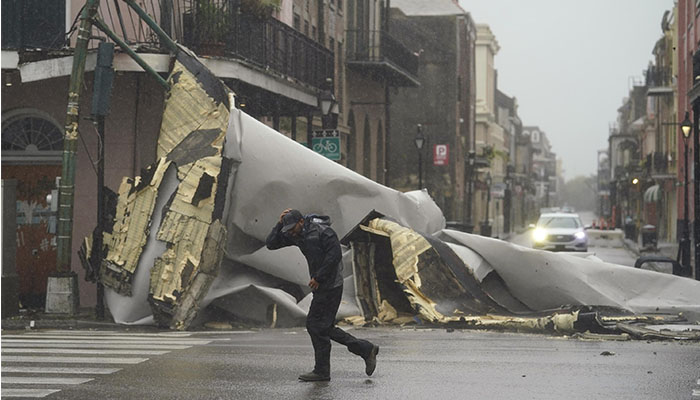
Hurricane Ida made landfall near Port Fourchon, Louisiana, on Sunday, August 29th as an extremely dangerous Category 4 hurricane packing winds of 150 mph, the National Hurricane Center said.
And for the residents of Louisiana, Ida was a somber reminder of the damage caused by Hurricane Katrina – because Ida made landfall on the 16th anniversary of Hurricane Katrina.
As if residents didn’t have enough to worry about, Ida was tied as the state's most powerful storm ever with Hurricane Laura from last year and the Last Island Hurricane of 1856 (Katrina made landfall as a Category 3 storm). And Katrina caused upwards of $150 billion in damage, earning it the title of the costliest hurricane of all time.
Whether you rent or own your home, you need insurance to help rebuild if a hurricane, a fire, or a tornado hits you.
But did you know that as a rule, standard homeowners’ and renters’ insurance does not cover flooding caused by extreme weather? And what happens if you need to replace your valuable coin collection after a hurricane if your house blows away?
You need flood insurance if you live in a designated flood zone. But flooding can also occur in inland areas and away from major rivers. Flood insurance is available for renters as well as homeowners, but a special policy is required as flood insurance – like earthquake insurance – is just not a part of standard homeowner's coverage.
If you think you need flood insurance, don’t wait for the arrival of a hurricane to buy a policy – there is a 30-day waiting period before the coverage takes effect.
Many policies don’t cover pricey jewelry, antiques, coins, collectible firearms and other exotic or expensive possessions. Or if they do, it is limited. In fact, some insurers even restrict what they pay to replace top-end computers, according to the National Association of Insurance Commissioners.
Generally, any coverage for these items is an aggregate amount less than a predetermined dollar limit, such as $1,000, for the total loss.
For example, let’s say you have an extensive coin collection worth $50,000. Your spouse has a watch worth $10,000.
Under a normal home policy, a hurricane, fire or tornado causing a total loss of coins and a watch means you may only receive up to $2,000 (assuming the aggregate coverage amount was $1,000 for each).
Your net loss: $58,000.
You could, however, prevent such a hit with an endorsement (aka a rider or in some cases a floater) to your home coverage, a sort of added policy within the main policy.
Essentially an endorsement specifically covers an article of personal property either excluded or not fully covered in the main policy. Also, a policy floater allows you to insure valuable items separately and for higher amounts than under a standard homeowner’s policy.
With such a rider – which comes at additional cost and is often higher in cities – your coverage includes much more, and you can choose your own deductible for the loss. Many endorsements also cover disappearance: if you lose the watch while cleaning the garage, for instance, the rider might cover the loss – which the home policy doesn’t.
Generally, endorsements are an inexpensive way to broaden coverage under an existing policy, though you must get valuables formally appraised to set coverage. Rates will vary according to such factors as the type and documented dollar value of the item covered and where you, the insured, live.
Call or comment below to arrange a time to talk about how we can protect you and your family.